
Product Page Optimization for Ecommerce: Drive More Conversions
Most ecommerce stores lose thousands in revenue every month because of underperforming product pages. Is your product page making it easy enough for shoppers to buy—or does friction cost you the sale? Product page optimization for ecommerce is not a cosmetic exercise; it’s a strategic lever that determines whether your business maximizes the value of every interested visitor or leaks revenue to competitors. For growth-focused ecommerce brands and Shopify store owners, understanding how to turn product page performance into conversion power is essential for scaling results.
Rethinking Product Page Optimization for Modern Ecommerce
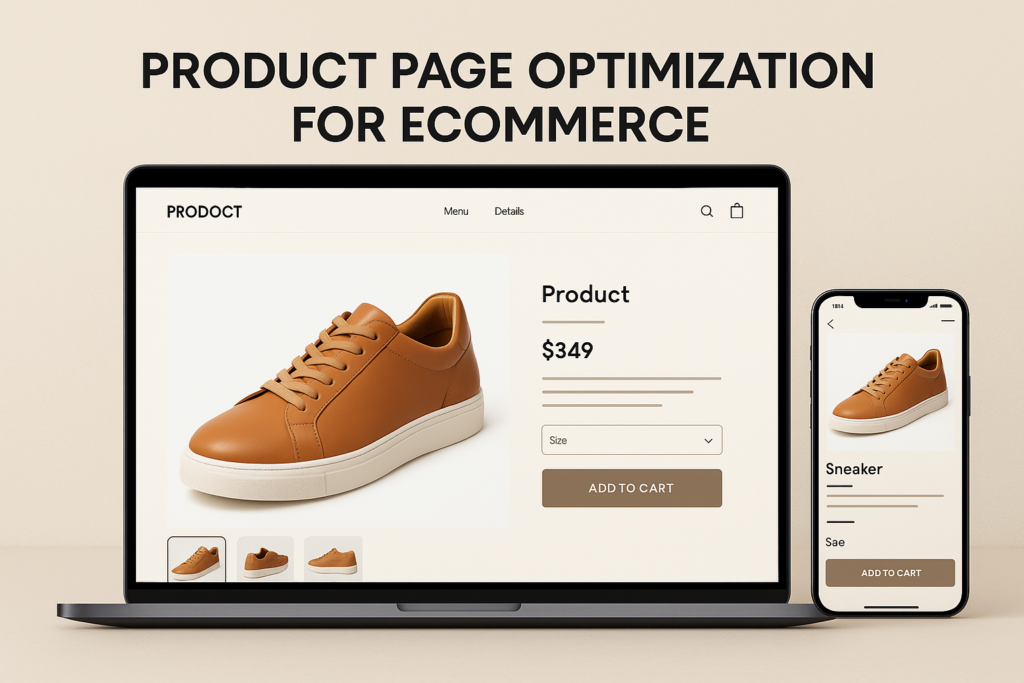
It’s tempting to view product page tweaks as marginal, but they have an outsized impact on revenue. The best brands treat their product pages as conversion engines, not static catalog entries. A high-performing product page combines the right content hierarchy, visual storytelling, and trust-building elements, all engineered for swift buyer decisions and minimal friction.
What holds most brands back? Product pages are often overloaded with generic product descriptions, weak imagery, buried value propositions, and unclear calls to action. The result: abandoned carts, missed upsells, and higher cost per acquisition. To outperform in today’s market, your product page must be purposeful at every level, designed for both the shopper’s decision journey and your business outcomes.
The Performance Framework: 8 Essentials for Product Page Optimization
At D2C Design, we use a repeatable decision lens to ensure every product page element delivers conversion value. Use this framework as a starting checklist for your own optimization:
- 1. High-Quality Visual Media: Showcase products with sharp, fast-loading images, 360° views, and explainer videos. Visual proof converts hesitant shoppers, especially in competitive markets.
- 2. Logical Content Hierarchy: Lead with a punchy headline, a concise value proposition, and scannable benefits. Make key info (price, options, stock status) visible above the fold.
- 3. Trust-Building Reviews & Social Proof: Prominently feature verified buyer reviews, star ratings, and authentic UGC. Address common objections, not just vanity praise.
- 4. Fit/Use Case Clarity: Anticipate and answer fit, sizing, and compatibility questions. Decision guides, comparison charts, and clear specs reduce returns and doubts.
- 5. Transparent Shipping & Returns: Don’t hide policies. Clearly state shipping timelines, costs, and return processes close to the “Add to Cart” button. Friction in logistics is a leading conversion killer.
- 6. Strategic FAQs: Deploy an FAQ accordion focused on buying barriers. Address safety, prep, installation, allergens, durability—whatever matters in your vertical.
- 7. Bundle & Upsell Mechanics: Package relevant accessories, bundles, or upgrades right on the product page. Smart suggestions and one-click add-ons lift average order value.
- 8. Relentless Call to Action Focus: Your main CTA must be visually dominant, contextually tailored (“Add to Bag,” “Get Started Today”), and surrounded by minimal distraction. Secondary CTAs (size guides, chat, share) support but never compete with the primary action.
Each of these elements should align toward a single goal—making the next step irresistibly easy for the buyer. The brands that excel here consistently outperform on conversion rate and lifetime value alike.
What Most Stores Get Wrong About Shopify Product Page Design
Even experienced ecommerce teams overlook critical product page details. Here are common traps we see in conversion rate optimization audits:
- Poor visual hierarchy forces users to hunt for key info, introducing unnecessary friction and exit points.
- Generic supplier copy that fails to articulate real-world benefits, unique value, or brand reliability.
- Inconsistent reviews or “ghost town” UGC erode credibility.
- Shipping, returns, and risk-reversal statements buried in footers or hidden tabs.
- CTAs that blend into the background, use passive language, or compete with secondary links.
- Bundling and cross-sell opportunities missed, leaving revenue on the table.
- Mobile layouts that break product flow, fail to load media quickly, or force endless scrolling to find key buying info.
The fix isn’t guesswork or hoping that a few style tweaks will move the needle. It’s the rigorous, detail-driven approach of a specialist Shopify web design agency focused on user experience, performance, and conversion science.
Audit-First Optimization: The Path to Measurable Ecommerce Performance
How do you move from incremental adjustments to transformational product page performance? It starts with a focused audit. Most high-potential conversion leaks are invisible to brands operating in the weeds—until data, usability research, and proven CRO frameworks expose them.
An expert-led Shopify product page audit goes beyond surface-level fixes. It analyzes heatmaps, conversion data, feedback, and customer journeys, then ranks opportunities by revenue impact. This systematic process reveals whether your product storytelling, visual experience, decision friction, and technical setup all drive toward a unified conversion goal.
For growth-ready brands, the upside of a thorough product page optimization ecommerce audit is twofold: faster conversion lifts and higher customer retention. Top brands treat optimization as an always-on performance discipline, not a one-time project.
Final Thoughts
The difference between an average product page and a high-converting one is measurable and meaningful. If your product pages are not relentlessly focused on buyer clarity, trust, and frictionless action, you’re leaving revenue on the table. Ecommerce growth belongs to the brands that treat every element of product page design as an investment in conversion, not a checkbox exercise.
Ready to eliminate friction and unlock higher sales? Claim your Free Ecommerce Product Page Audit from D2C Design and see where performance breakthroughs are hiding on your own site.
Common Questions
How do I know if my ecommerce product page needs optimization?
If your product page has high traffic but low conversion rates, frequent cart abandonment, or consistent customer questions about product details, fit, or shipping, it’s a signal that optimization is needed. An expert audit can reveal hidden friction points and conversion gaps.
What are the most effective product page elements for increasing conversions?
The highest-impact elements are prominent, high-quality images/videos, clear content hierarchy, buyer reviews or ratings, specific fit/use details, visible shipping and returns info, conversion-focused FAQs, product bundles, and a visually dominant CTA.
How can a Shopify product page audit improve my ecommerce revenue?
A focused product page audit identifies where users drop off, what questions are left unanswered, and which elements aren’t pulling their weight. Recommendations are then prioritized for conversion impact, leading to measurable revenue gains without speculative redesigns.
What’s the difference between product page design tweaks and a full CRO strategy?
Design tweaks address obvious or cosmetic issues but rarely move key metrics. A full conversion rate optimization (CRO) strategy starts with deep user data, prioritizes improvements by revenue impact, and applies rigorous testing for lasting gains. CRO turns product pages into high-performing assets, not just better-looking storefronts.