


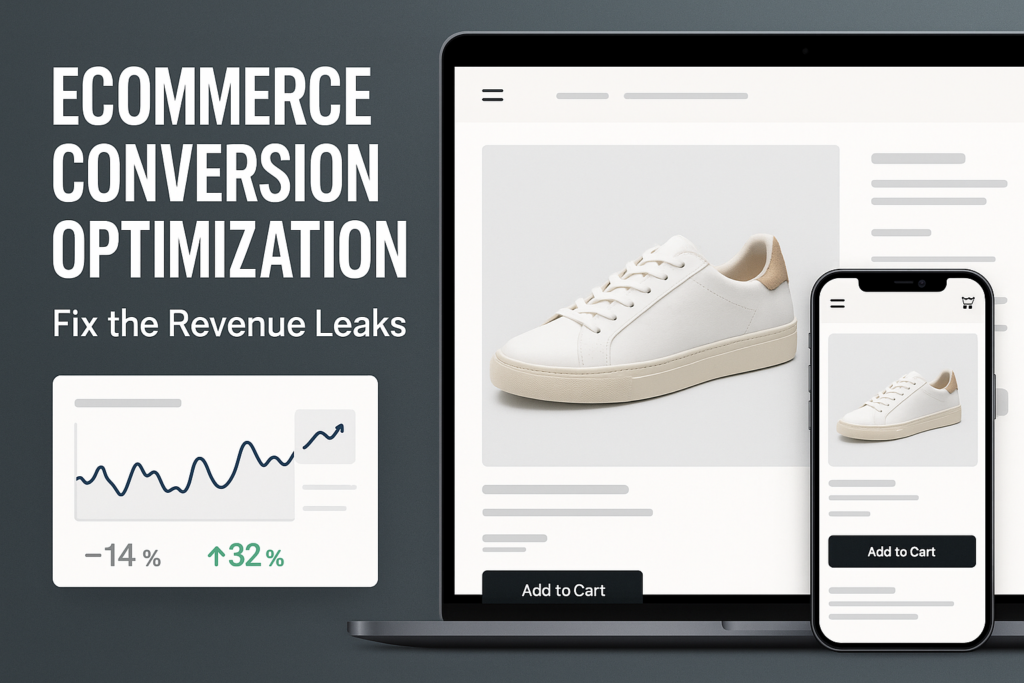
Ecommerce Conversion Optimization: Identify and Fix Revenue Leaks
You invest heavily in traffic, but your ecommerce sales aren’t keeping pace. The disconnect? Too many interested shoppers drop out somewhere along their journey. Ecommerce conversion optimization gives you a practical, systematic way to seal those revenue leaks—by improving site usability, buyer confidence, checkout flow, speed, and trust when it matters most.
It’s not enough to “drive more traffic” or put out generic CRO tips. To outperform as a Shopify or DTC brand, you need actionable insight into where you’re losing high-intent buyers—and a roadmap to fix those friction points before they cut deeper into your bottom line.
Stop Guessing—Pinpoint Where Revenue Leaks Occur
For most ecommerce businesses, the biggest performance gaps hide in plain sight. You might have site-wide analytics, but unless you break down the buying journey—product discovery, product detail page (PDP) evaluation, cart, checkout, and post-purchase—you’re likely missing the real reasons revenue slips through the cracks.
- Unclear Navigation: If shoppers can’t easily find categories, new arrivals, or offers, they don’t stay. Every extra click lowers your odds of a sale.
- Weak PDPs: Incomplete product descriptions, stock photography, and unclear value props erode trust. Confidence is won or lost in seconds.
- Speed Friction: Page load delays kill momentum—especially on mobile. Shoppers expect instant, seamless interaction at every stage.
- Checkout Gaps: Poorly optimized checkout flows, missing guest checkout, or errors with autofill quickly frustrate buyers right before conversion.
- Trust Signals: Lack of reviews, clear policies, or real-time stock/urgency reminders will tank conversion rates for even the best products.
Most conversion loss is silent. Using heatmaps, session replays, and action-based analytics will uncover the costly dropoff points across your funnel—allowing you to focus your CRO efforts where they matter most.
CRO in Action—Fix What Matters Most First
Effective ecommerce CRO requires a focused, prioritized approach. Not every element is equally broken, or equally valuable to fix. Here’s a practical CRO decision lens D2C Design uses to accelerate revenue impact:
- Product Discovery: How quickly can users find what matters? Refine your search, collections, filters, and navigation.
- PDP Confidence: Would YOU trust your product pages enough to buy? Inject rich content, answer buyer objections, surface reviews, size guides, shipping info, and return policies.
- Cart & Checkout Progression: Remove needless steps. Use progress indicators, clear calls-to-action, strong guarantees, and eliminate hidden fees.
- Site Speed: Optimize assets, leverage lazy loading, and employ content delivery networks (CDNs) for sub-second mobile performance.
- Trust-Building Elements: Display real-time support access, SSL certificates, and authentic social proof visibly throughout the buyer journey.
For Shopify brands, specialized Shopify CRO tactics—such as leveraging Shopify-native checkout, optimizing for mobile UX, and integrating with best-in-class apps—consistently outpace generic ecommerce fixes.
The Ecommerce Conversion Optimization Checklist
Use this quick checklist to identify critical leaks in your funnel. Address as many of these as possible to improve conversion rates before considering larger redesigns:
- Is navigation intuitive and tailored for your primary buyer personas?
- Do your product pages answer all common pre-purchase objections?
- Are trust badges, reviews, and clear shipping/returns visible before checkout?
- Is your critical path (from home to checkout) lightning-fast on mobile and desktop?
- Is your checkout flow streamlined, mobile-friendly, and bug-free?
- Can users easily add to cart, return to browsing, and complete orders in a few clicks?
Effective ecommerce website optimization is about small, compounding wins in each phase—never generic, one-size-fits-all changes.
Audit-Driven Optimization Is Your Fastest Growth Lever
If your team is unsure where your biggest conversion issues actually lie, a comprehensive third-party audit is often your best starting point. Expert Shopify conversion rate optimization audits analyze your real metrics, site flows, content, and technical foundation—removing guesswork and revealing a clear, prioritized backlog of revenue-generating CRO fixes.
Unlike expensive full-site redesigns—which drain resources and often miss core issues—an audit-driven approach maps quick wins to revenue impact. You get a roadmap that aligns effort and investment to sales outcomes, not just aesthetic updates.
For any DTC or Shopify store serious about sustainable growth, a data-backed audit is the essential first move, not a “nice to have.”
Final Thoughts
Conversion gaps aren’t solved by luck, traffic, or generic playbooks. A strategy-first, audit-driven approach to ecommerce conversion optimization will compound revenue gains and create buyer experiences that drive true business momentum. Prioritize clarity, friction removal, and buyer trust—and every dollar spent on traffic will work exponentially harder for your brand.
If your site needs sharper CRO results, claim your Free Ecommerce Conversion Audit—and receive an actionable roadmap for fixing your highest-impact revenue leaks.
Common Questions
What is ecommerce conversion optimization, and why does it matter?
Ecommerce conversion optimization is the strategic process of improving your site’s ability to turn visitors into buyers—by removing friction, building confidence, and optimizing each step in the journey toward purchase. Done well, it delivers higher revenue from your existing traffic without increasing paid spend.
How can I tell where my ecommerce site is leaking conversions?
Combine site analytics (dropoff points, bounce rates), session replays, and heatmaps to visualize exactly where users abandon their journey—often during product search, PDP evaluation, or checkout. Reviewing these real behaviors pinpoints the highest-leverage areas for CRO action.
What are the most common CRO mistakes for Shopify sites?
The biggest missteps include relying on generic themes, missing trust signals, slow mobile performance, over-complicated checkouts, and failing to audit the actual customer journey in your real market segment.
Should I focus on a full redesign or incremental ecommerce CRO?
Start with incremental, data-driven ecommerce CRO. Target your highest-impact friction points first, guided by an expert audit. Redesign should only follow if CRO improvements reveal foundational experience gaps or technical limitations that can’t be solved incrementally.