

Electronics Ecommerce Website Design: Optimize for Complex Products
Too many electronics ecommerce websites underperform because they treat user experience as an afterthought. If your ecommerce store sells tech products or gadgets with complex specifications, you’re likely losing revenue not due to price or competition—but because shoppers can’t easily compare specs, filter for compatibility, or understand what they’re buying. To drive growth and earn customer trust, your electronics ecommerce website must turn information complexity into decision simplicity.
Why Most Electronics Ecommerce Websites Underperform
The business case for advanced electronics ecommerce web design is clear: most buyers abandon their carts not because they can’t afford your product, but because your site fails to answer their questions before purchase. Electronics and tech shoppers seek high-ticket products—often with technical requirements, model compatibility, or warranty concerns. If your electronics ecommerce store lacks the ability to let users filter by chipset, storage, compatibility, or compare side by side, you’re leaving revenue on the table.
Three costly symptoms show up repeatedly in the tech ecommerce website space:
- Poor discovery—buyers can’t sort products by the specs that matter to them (e.g., processor type, screen resolution, operating system, accessories compatibility).
- Low buyer confidence—support, warranty, and compatibility details are buried, outdated, or confusing.
- Education gaps—unclear product pages, weak in-page guides, or missing comparison tables leave shoppers feeling uncertain.
Solving these problems isn’t about fancy animations—it’s about performance, clarity, and actionable information. A revenue-ready electronics ecommerce website makes every step frictionless for buyers with specific needs.
UX Patterns That Convert: Spec Filters, Comparison, and Support
Modern buyers expect sophisticated shopping experiences, especially when selecting high-consideration products like laptops, headphones, smart home devices, or gaming hardware. Standard product grids aren’t enough. Your tech ecommerce website needs UX elements that empower decision-making.
- Faceted Filtering: For every major product category, enable filtering by the technical specs core to purchase decisions. Let users filter phones by RAM and camera, laptops by CPU and battery life, or chargers by device compatibility.
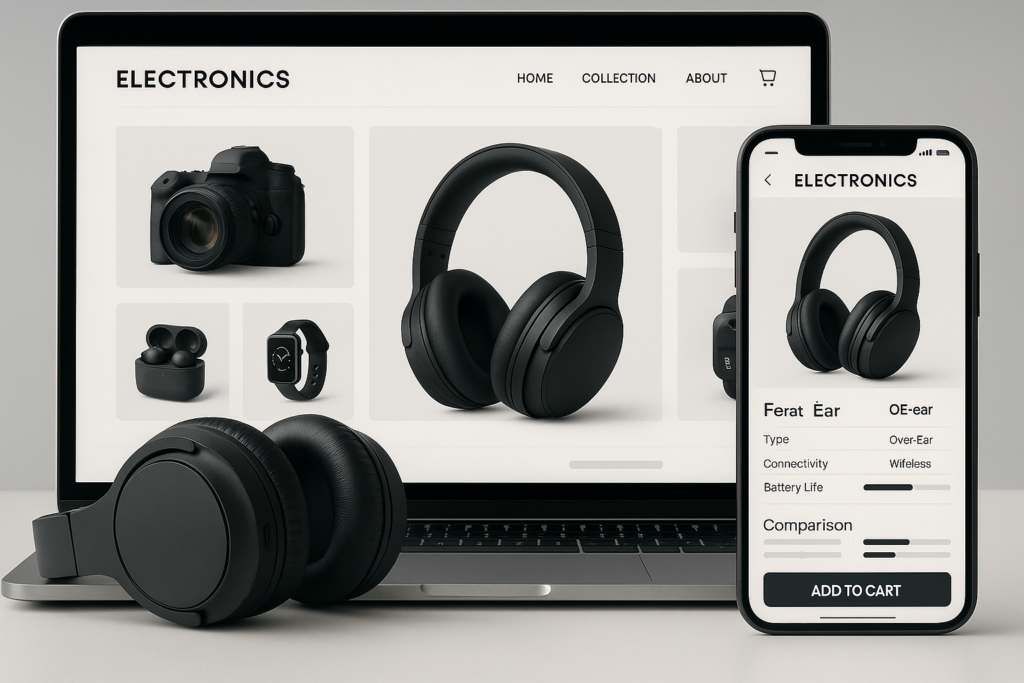
- Side-by-Side Comparison: Implement native comparison functionality that lets buyers select multiple products and review differences at a glance. Prioritize fields that matter most to customers: specs, features, warranty, price, and availability.
- Compatibility Checks: Dynamic prompts or dropdown selectors (e.g., “Will this work with…?”) save buyers from research headaches and dramatically reduce returns. Benchmark against top gadget ecommerce store experiences.
- Instant Support Touchpoints: Embed live chat, robust FAQs, or in-page guides near key points of friction, like technical details, warranty info, and add-to-cart decisions. Prioritize transparency and accuracy over sales hype.
- Transparent Warranty and Returns Info: Surface warranty details, support policies, and easy-to-access documentation to build trust—especially for higher ticket items.
Done well, these UX enhancements reduce buyer hesitation and increase both the average order value and lifetime value in the electronics vertical.
The Electronics Ecommerce Site Performance Checklist
Use this checklist to quickly audit whether your electronics ecommerce website is optimized for the needs of modern tech buyers:
- Product Discovery: Are filters fast, comprehensive, and based on the most-searched product attributes?
- Spec Comparison: Can users easily compare features or specs side by side, without leaving the site?
- Compatibility Assurance: Is there clear messaging or support to confirm accessories or model fit?
- Content Clarity: Do product pages include all critical specs, buyer guides, and supporting documents?
- Support Proximity: Are quick help options (chat, FAQs, guides) visible throughout the buying journey?
- Warranty and Returns: Are warranty options and procedures stated clearly and prominently?
If you answered “no” to any of the above, your site is likely losing buyers to competitors who invest in these conversion levers. For a no-obligation review, consider the D2C Design Free Audit for electronics ecommerce stores.
Performance-Ready Shopify Design for Electronics Brands
Shopify is a powerful platform for electronics and technology brands—but out of the box, it won’t address the deep UX and merchandising needs of your segment. Custom Shopify development is critical if you sell products with complex specifications or high attachment/upgrade opportunities.
Here are essential considerations for electronics brands investing in Shopify:
- Custom Theme Development: D2C Design crafts Shopify stores for electronics brands that prioritize advanced filtering, in-page spec tables, and clear calls to action. Our Shopify services enable robust technical content, scalability, and seamless integrations.
- CMS and Data Structure: Don’t settle for one-size-fits-all product templates. We build flexible product data models, allowing for variant-driven displays (think: color, size, power rating, compatibility) that support both merchandising and SEO.
- Conversion-Centered Information Architecture: Site navigation, category hierarchy, and search functionality should mirror how electronics buyers shop—by feature, application, or upgrade path.
- Proven Results: See how electronics and gadget brands are increasing conversion rates, lowering returns, and building long-term customer trust with optimized ecommerce builds in our real results.
Performance-ready site design means every spec, page, and support action leads to a business outcome—not just a prettier website.
Product Education: Turning Complexity into Confidence
Electronics buyers want to feel sure—not just about features, but about compatibility, futureproofing, and after-sale support. Your ecommerce site should treat product education as a direct conversion lever:
- Detailed Product Pages: Integrate visual spec tables, FAQs, and interactive guides.
- Video Tutorials and Demo Content: Show use cases, setup instructions, or comparisons between similar models—reducing post-purchase doubt.
- On-Page Educational Snippets: Contextual “learn more” popups or expandable sections near technical fields help users without overwhelming the page.
- Smart Recommendations: Suggest accessories, upgrades, or similar products with educational notes clarifying their fit.
The right educational touchpoints don’t just answer questions—they shorten the sales cycle and reduce costly returns.
Final Thoughts
High-growth electronics ecommerce brands win on buyer confidence, speed, and clarity. When your electronics ecommerce website turns specs and support into performance drivers, you create a true growth engine—where buyers return, refer, and trust your brand with higher-value purchases.
Want to know exactly where your electronics site leaves revenue on the table? Request your Free Audit from D2C Design to see where improved design, UX, and conversion strategy can unlock your store’s true performance.
Common Questions
What makes a strong electronics ecommerce website for complex products?
Effective electronics ecommerce websites offer advanced filters by tech specs, clear compatibility information, side-by-side comparison tools, and transparent warranty/support details—making it easy for buyers to quickly evaluate and buy with confidence.
How can I help customers compare tech specs and features on my ecommerce site?
Implement dedicated comparison tools, visual spec tables on product pages, and high-contrast callouts showing major differences or upgrade options. This reduces analysis paralysis and shortens time to purchase.
What Shopify features support advanced filtering and product compatibility for electronics?
With custom Shopify development, brands can leverage meta fields, tag-based filters, dynamic product recommendations, and compatibility modules—allowing buyers to filter by chipset, screen size, compatibility, and more. D2C Design specializes in building these advanced solutions for Shopify.
How does optimizing warranty and support info increase conversion in electronics ecommerce?
Clear, accessible warranty and support information builds trust, reduces pre-purchase friction, and reassures shoppers—especially for higher-ticket gadgets—leading to higher conversion rates and fewer abandoned carts.