


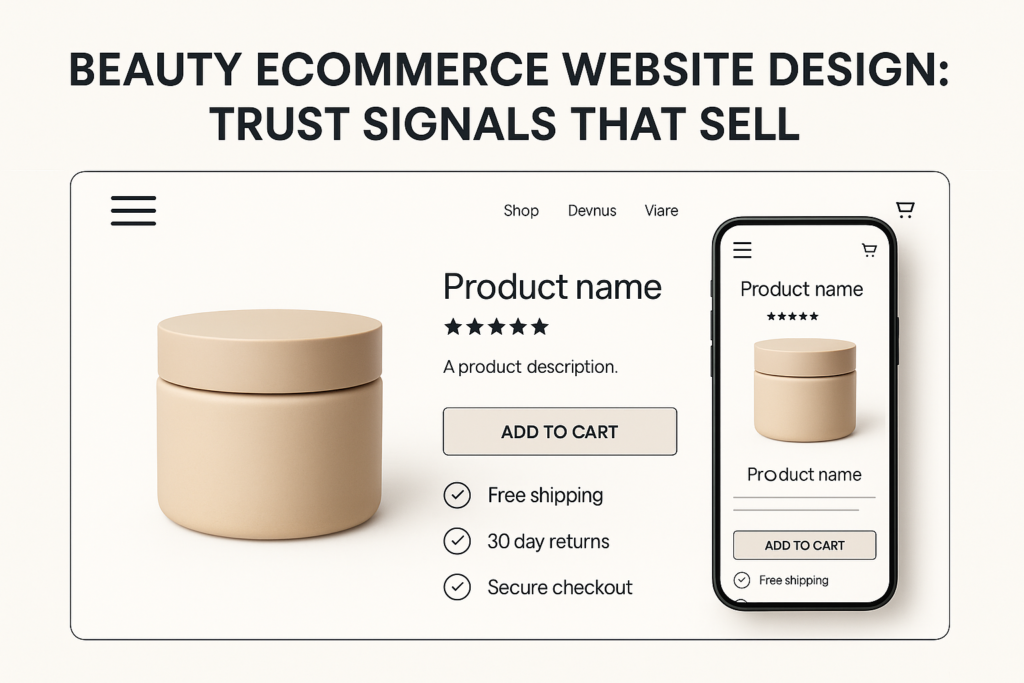
Beauty Ecommerce Website Design: Proven Trust Signals That Drive Sales
Even industry-leading beauty brands lose sales on their ecommerce sites—often due to the invisible absence of crucial trust signals. As competition in beauty ecommerce intensifies, shoppers demand more than attractive visuals or clever copy. Beauty ecommerce website design now hinges on one defining factor: instantly earning buyer trust with the right mix of product transparency, credible reviews, and user experience.
If your skincare, cosmetics, or beauty ecommerce store is experiencing abandoned carts, weak retention, or lackluster conversion rates, it’s likely not a traffic problem. The root issue is often credibility gaps embedded in your site’s design and experience. Let’s break down how modern beauty brands are bridging the trust divide—and converting cautious visitors into loyal customers.
Why Trust Signals Make or Break Beauty Ecommerce Websites
In the beauty category, purchasing is intensely personal and high-consideration. Customers are putting your products on their bodies and faces—they want absolute confidence in what they’re buying. Trust, as a result, is table stakes, not a bonus.
- Ingredient Transparency: Shoppers scan for simple, accessible ingredient lists—ideally accompanied by educational content about the formulation and any allergens.
- Product Education: Clear guidance on how a product is used, what results to expect, and who it’s best suited for reduce uncertainty and build trust.
- Certifications & Safety Data: Visibility of certifications (cruelty-free, vegan, dermatologist-tested) and safety information can influence purchase decisions, especially for sensitive or health-aware consumers.
Yet, too many beauty ecommerce stores bury these essentials or deliver them in generic, hard-to-find ways. This erodes conversion at every step of the buying journey. High-performing beauty ecommerce website design starts with an “open label” mindset—putting transparency and education at the center of every PDP and landing page.
Deploying Social Proof: Reviews, UGC, and Conversion
For cosmetics ecommerce, nothing earns trust more quickly than the authentic word and image of another real buyer. Social proof not only moves hesitant visitors closer to checkout—it also preemptively answers objections and reduces return rates.
- Verified Reviews: Prioritize displaying verified, recent customer reviews directly on product pages. Include ratings, rich snippets, and context (skin type, age, concern) to make reviews personally relevant.
- User-Generated Content (UGC): Showcase before-and-after images, real user routines, and UGC galleries. This builds aspiration and shows real results in a relatable context.
- Influencer & Expert Endorsements: Strategic placement of trusted endorsements can validate quality, especially for new-to-market or premium-priced products.
Conversion leaders in the beauty vertical unify trust signals and social proof. Cross-reference this approach with our real results to see how social proof drives measurable impact for brands in practice.
Optimizing UX for Beauty Brands: Speed, Design, and Checkout Flow
Trust is not just about what you say; it’s about how your site works. Frustrating performance or confusing flows are interpreted as incompetence—degrading trust even with the best product.
- Website Speed: Ensure fast load times, especially for image-heavy PDPs and interactive features. Lag kills both trust and AOV in beauty ecommerce.
- Mobile-First UX: Beauty shoppers overwhelmingly buy on mobile. Responsive layouts, touch-friendly navigation, and lightning-fast checkout are now baseline requirements.
- Intuitive Purchase Pathways: Remove friction from discovery to checkout. Smart bundling, clear benefits, and simple cart flows boost both conversion and lifetime value.
If you’re building or optimizing on Shopify, our Shopify web design and development services deliver enterprise-grade performance and tailored UX for beauty brands. The tools and templates you choose matter—leverage those built for your vertical’s trust and conversion needs.
A Framework for Trust-First Beauty Ecommerce Website Design
Effective beauty ecommerce website design deploys trust signals according to this practical decision lens:
- Visibility: Is this trust factor (ingredient, review, guarantee) instantly visible above the fold where users need it most?
- Relevance: Is the content tailored to the buyer’s needs (e.g., skin type, solution) and not just generic marketing claims?
- Proof: Is social proof credible, current, and easy to verify? Are images authentic and relevant?
- Performance: Does the feature load quickly and enhance—rather than disrupt—the shopping journey?
- Clarity: Are your trust features paired with simple, jargon-free explanations?
Apply this checklist to every stage of your beauty ecommerce store—from homepage, to product, to checkout. The result: more confident first-time buyers and higher repeat purchase rates.
Final Thoughts
In the beauty sector, trust is the strongest conversion lever you control. If ingredient claims are buried, site speed lags, or reviews feel generic, you create friction at every step. The fastest-growing skincare and cosmetics brands invest in website design that eliminates these vulnerabilities—building trust into every interaction, click, and path to purchase.
Ready to Uncover Missed Opportunities?
Book a Free Audit with D2C Design to quickly identify where your beauty ecommerce website is losing trust—and exactly how to fix it for stronger conversions and higher revenue.
Common Questions
What trust signals should a beauty ecommerce website prioritize first?
Ingredient transparency, clear product education, and verified customer reviews should always be the baseline. These signals reduce hesitation and support higher purchase confidence immediately.
How do Shopify-based skincare websites build credibility with new visitors?
They leverage Shopify’s native review functionality, showcase custom visual storytelling, and highlight certifications, clinical evidence, and real user results directly on product and landing pages.
What’s the most common mistake beauty brands make in ecommerce website design?
The biggest misstep is focusing on high-impact visuals while neglecting conversion fundamentals—such as benefit-driven messaging, transparent return/shipping policies, and seamless mobile checkout experiences.
Can D2C Design help audit and optimize our current cosmetics ecommerce performance?
Yes. Our Free Audit provides a tailored review of your site’s trust factors, UX weaknesses, and conversion roadblocks, with an actionable roadmap for improvement.