
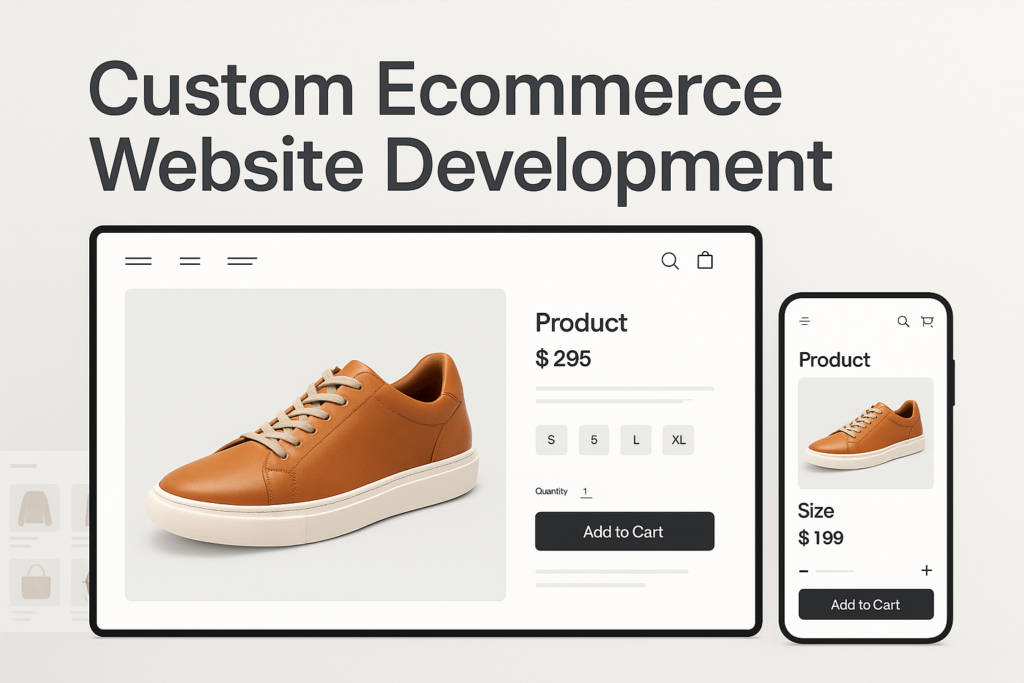
Custom Ecommerce Website Development: Build for Performance and Conversion
Investing in custom ecommerce website development is not about having the flashiest storefront—it’s about streamlining the path to purchase and scaling your competitive advantage. For brands serious about revenue and operational efficiency, the right custom features can transform your website from a digital catalog into a high-converting sales engine. But not every feature should be built from scratch. Knowing when custom development adds value—and when it simply drains resources—is where growth-focused brands win.
When Custom Ecommerce Development Drives Results
The strongest ROI from custom ecommerce development comes when you address problems and opportunities that off-the-shelf solutions and theme templates simply can’t solve. This is where you move beyond basic ecommerce website development and craft an experience that fits your business model, catalog, and conversion strategy.
- Advanced Catalog Logic: If your product catalog requires complex filtering, personalized collections, or unique variant logic—think bundle builders, dynamic sets, or intricate groupings—customization is essential. Out-of-the-box platforms struggle with anything beyond standard product grids.
- Integrations: Seamless, automated connections to ERP, inventory management, 3PLs, headless CMS, or advanced analytics platforms often demand custom ecommerce development. These integrations streamline operations, enabling real-time inventory, flexible fulfillment, and unified data.
- Checkout Paths: Subscription models, B2B pricing, custom upsells, or multi-step purchase journeys require tailored checkout experiences. Standard ecommerce platform development often limits your ability to optimize for speed and conversion.
- Merchandising Flexibility: Merchandisers benefit from custom admin tools, campaign landing pages, and shoppable content blocks that empower experimentation and faster launches—far beyond what’s possible in rigid theme layouts.
- Performance and Tracking: Custom front-ends (or headless builds) can unlock faster load times, and advanced analytics tracking ensures you’re measuring what matters for CRO—something many default platforms don’t support.
At D2C Design, we approach every project by mapping business goals to functionality, ensuring any custom build is tightly aligned with measurable commercial outcomes. Explore our website development services to see how we approach these challenges for ambitious brands.
Avoiding Over-Customization and Underperformance
Custom does not mean “build everything from scratch.” Too many ecommerce sites burn budget and slow down time-to-launch by reinventing the wheel—adding flashy, untested features that create maintenance headaches and don’t influence conversions. The balance comes in knowing where standard tools suffice and where customization delivers outsized impact.
- Skip Vanity Features: Visual flourishes, custom animations, or non-standard navigation can distract users and complicate usability without delivering revenue gains.
- Prioritize Conversion Levers: Focus your custom build on features that reduce friction, increase order value, or drive specific segments through the funnel.
- Leverage Shopify’s Foundation: For most growth-stage brands, Shopify and Shopify Plus deliver stability, scalability, and a robust app ecosystem. Smart customization means using Shopify’s flexible architecture to add targeted customizations, not replace the entire core. See how our Shopify web development expertise anchors performance-driven custom builds.
When in doubt, ask: Will this feature measurably increase conversion, customer value, or operational efficiency?
The D2C Customization Decision Lens
Use this practical framework when considering any custom ecommerce website development:
- Does it solve a recurring friction point for our customers or operations?
- Will it demonstrably improve site speed, user experience, or data quality?
- Is there a commercial impact (ASP, AOV, CLV, conversion rate) tied to this customization?
- Can off-the-shelf solutions address 80% of the need—with customization reserved for the critical 20%?
- What is the ongoing maintenance and technical debt of this feature?
The answers will guide where to double down and where to leverage existing solutions thoughtfully.
Auditing for Custom Development Opportunities
The most effective custom ecommerce development begins with a clear understanding of your current site’s strengths and bottlenecks. A thorough audit—informed by analytics, UX heatmaps, and conversion data—pinpoints exactly where targeted investment will pay off.
- Speed: Are there legacy apps, bloated code, or UX bottlenecks slowing your critical pages?
- Mobile Experience: Are friction points emerging on small screens that off-the-shelf themes can’t resolve?
- Merchandising and Content: Are your merchandising, landing, and content modules flexible enough to respond to campaigns and trends?
- Tracking and CRO: Are you missing granular user data, event tracking, or multichannel attribution?
An ecommerce website audit reveals which customization efforts truly move the needle—an essential reality check before scoping your next project.
Check the operational need before building
Review whether buyers can reach checkout clearly despite catalog complexity, whether integrations require manual work, and whether the current theme can support required merchandising. Check performance and analytics as well. A custom build should address a documented limitation whose cost or customer impact justifies the development and maintenance effort.
Final Thoughts
The most successful brands don’t chase customization for its own sake. They deploy custom ecommerce website development as a focused, performance-driven accelerator—directly tied to growth goals, customer needs, and operational realities. Every dollar spent on development should be in service of faster paths to revenue, better user experiences, and measurable business results.
Ready to see where targeted custom development could drive the biggest impact for your ecommerce business? Request a Free Audit with D2C Design for a clear, data-backed roadmap to stronger performance and conversion.
Common Questions
What are the key signs that my brand needs custom ecommerce website development?
If your catalog complexity, integrations, or specific sales strategies are hitting the ceiling of what standard platforms or apps can deliver—or if you’re running into bottlenecks with speed, checkout flows, or unique merchandising needs—custom development is often the path to real differentiation and growth.
How does custom ecommerce development improve my sales or conversion rates versus using templates?
Custom development allows you to tailor every major sales lever—product discovery, upsell paths, checkout UX, and personalized experiences—based on real customer behavior and business goals. While templates cover the basics, the best results come from removing friction that’s unique to your operation.
Which parts of my ecommerce site benefit most from tailored development?
Catalog filtering, flexible landing and merchandising modules, integrated checkout (esp. for subscriptions, B2B, or upsells), advanced analytics tracking, and backbone integrations with inventory or ERP systems most often justify customization.
What’s involved in an effective ecommerce website audit for custom build needs?
An effective audit analyzes your analytics, UX flows, speed, device performance, content flexibility, and technical integrations to surface conversion blockers and untapped revenue opportunities—laying out a prioritized roadmap for high-ROI custom development.