

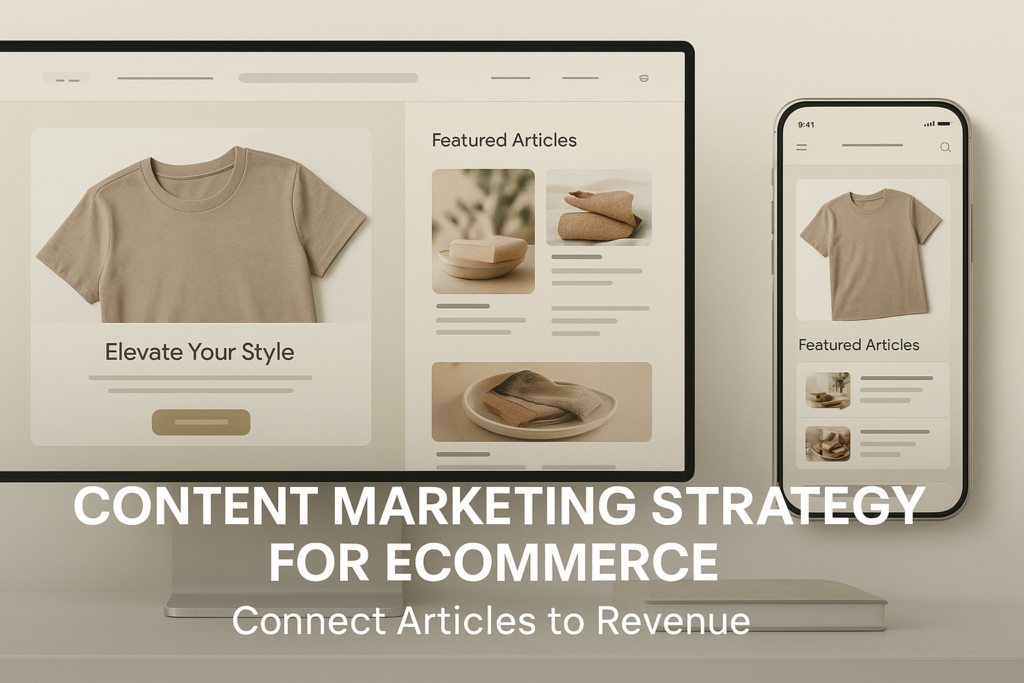
Content Marketing Strategy for Ecommerce: Connect Content to Conversions
Most ecommerce content never escapes the “awareness” trap—readers visit, but they don’t buy. For growth-focused brands, the disconnect between content production and real revenue is both a missed opportunity and an unnecessary cost. A high-performing content marketing strategy for ecommerce doesn’t settle for passive traffic. It forges a clear, data-driven pathway from blog visit to product page, from information to intent, and from intent to transaction. If your content isn’t actively supporting your sales and conversion targets, it’s time to recalibrate your approach for measurable performance.
Why Most Ecommerce Content Fails to Drive Conversions
Almost every brand has a blog, but few leverage content for anything beyond SEO. Conventional strategies focus on topics, keywords, and traffic acquisition while neglecting the steps required to move a reader from initial discovery to product interest and action. The result? Lots of visitors. Few customers.
This happens because:
- Content often answers broad questions, not immediate buyer needs
- Internal links stop at related articles—instead of connecting to solutions and products
- No framework ties articles to conversion events or post-visit behavior
- Performance is measured by visits, not by meaningful revenue metrics
Without a conversion-first strategy, your best-performing articles simply become high-traffic dead ends. This undercuts your organic investment and stunts CRO (conversion rate optimization) progress across your ecommerce site.
Building a Product-Led Content Marketing Flywheel
Turning content into a scalable sales engine requires a structural shift—a product-led approach. Every guide, checklist, or blog post should intentionally guide the reader toward a relevant product, collection, or service. Here’s how a robust ecommerce content marketing strategy makes this happen:
- Research real buyer questions: Identify questions that signal intent, like “best supplements for focus” or “how to style gold jewelry.” Build content around these queries.
- Architect the journey: Map each article to a specific point in the buyer journey—education, evaluation, or purchase—and clarify the preferred next step. Never leave the user at a dead end.
- Feature products/collections contextually: Integrate relevant products, categories, and service mentions within the flow of content—not just in sidebars or footnotes.
- Layer in direct paths to conversion: Use clear, on-page CTAs (calls to action) that invite readers to explore, compare, or consult—whether that’s viewing a collection, starting a quiz, or booking a Free Audit.
- Design internal links as highways, not cul-de-sacs: Guide readers from informational content to solution pages and revenue-driving services, not just endlessly to other articles. See how content is structured on D2C Design’s article hub for practical examples.
Framework: Product-Led Content Audit Checklist
- Does every major article directly reference at least one product, solution, or service?
- Are CTAs aligned with the reader’s stage—education, evaluation, decision?
- Are high-traffic posts mapped to high-conversion pages or next steps?
- Do internal links answer, “What should the reader do next?”
- Are articles regularly reviewed for outdated links, dead ends, and missed conversion paths?
Measuring Impact and Iterating for Growth
Once your content strategy is structurally sound, the next step is relentless measurement and optimization. Most ecommerce teams track traffic and—if they’re advanced—some measure blog-assisted revenue. But to compete at the top tier, performance-minded brands go deeper:
- Track behavioral metrics (bounce rates, average session duration, next-page paths) on content pages
- Audit where users drop off between discovery, product, and checkout steps
- Test and refine in-article CTAs: newsletter offers, product features, expert consults
- Use conversion and attribution analytics to quantify which specific articles, categories, or guides drive the highest ecommerce conversions
- Iterate content structure based on real data, not assumptions—removing distractions and doubling down on what moves the needle
Every quarter, conduct a systematic review. Identify which content assets are acting as strong bridges to purchase—and which aren’t. Optimize, update, and retire accordingly. This iterative discipline is what separates casual blogging from real ecommerce content marketing success.
Elevating Ecommerce Content with Conversion in Mind
An intentional content marketing strategy for ecommerce is an active system—not a set-and-forget campaign. From ideation to distribution, every decision should support the brand’s commercial goals. Leading ecommerce teams ensure this by:
- Maintaining tight alignment between merchandising/promotions and content calendars
- Briefing writers and designers on product positioning, not just keyword lists
- Prioritizing articles and guides that have provable impact on high-value landing pages, categories, and services
- Integrating structured data, performance-focused UX, and scannable design for faster and clearer buyer journeys
Done right, content marketing becomes not just an amplification tool, but a conversion asset—fueling Shopify sales and strengthening every other channel in your mix.
Final Thoughts
Keyword-driven content can drive visibility, but a product-led approach turns readers into customers. When you connect buyer questions to tailored journeys, features, and offers through strong UX, clear CTAs, and strategic internal links, you activate your content as a real lever for ecommerce growth. Don’t let your highest-traffic pages become missed opportunities—run an audit, redesign paths to purchase, and let your content strategy become a direct driver of revenue.
Ready to see where your content connects—and where it leaks? Request a Free Audit to benchmark your ecommerce content marketing gaps and opportunities.
Common Questions
What is a product-led content marketing strategy for ecommerce, and how does it differ from typical blog strategies?
A product-led strategy puts ecommerce offerings—products, collections, and services—at the center of each content asset. Unlike generic blog content that stops at information, product-led content connects topics directly to buyer needs and purchase paths, driving measurable sales and conversion growth.
How do you structure internal links in ecommerce content to drive more conversions?
Effective internal linking guides readers from high-intent articles to relevant product pages, service offers, or conversion events—never leaving them at a dead end. The key is intentionality: map every top-performing blog to a next action aligned with your revenue goals, using contextual anchor text and clear CTAs.
What analytics should ecommerce brands track to evaluate the effectiveness of their content marketing efforts?
Go beyond traffic. Track behavior flow (paths users take after reading content), product page visits from content, assisted conversion value, bounce and exit rates, and the performance of CTAs. Use this data to optimize content, update linking logic, and focus future strategy on what drives sales.
When should an ecommerce brand consider a professional content marketing audit?
If you have high-traffic blog content that isn’t driving meaningful sales, experience plateauing conversion rates, or suspect your internal linking is under-optimized, a content marketing audit can quickly pinpoint missed opportunities and recommend actionable changes for greater revenue impact.