
Ecommerce Content Marketing: Building a Product-Led SEO Strategy
Your collection and product pages aren’t enough. If your ecommerce site’s content isn’t guiding, ranking, and converting for your top products, you’re leaving revenue on the table. In eCommerce, strong ecommerce content marketing doesn’t just inform—it directly impacts sales performance, buyer trust, and bottom-line growth. Too many brands rely on generic blogs or surface-level tips while missing the deeper connection between content, site structure, and true buying intent. Let’s break down how product-led SEO content turns a website from passive brochure to active sales engine.
The Real Role of Ecommerce Content Marketing
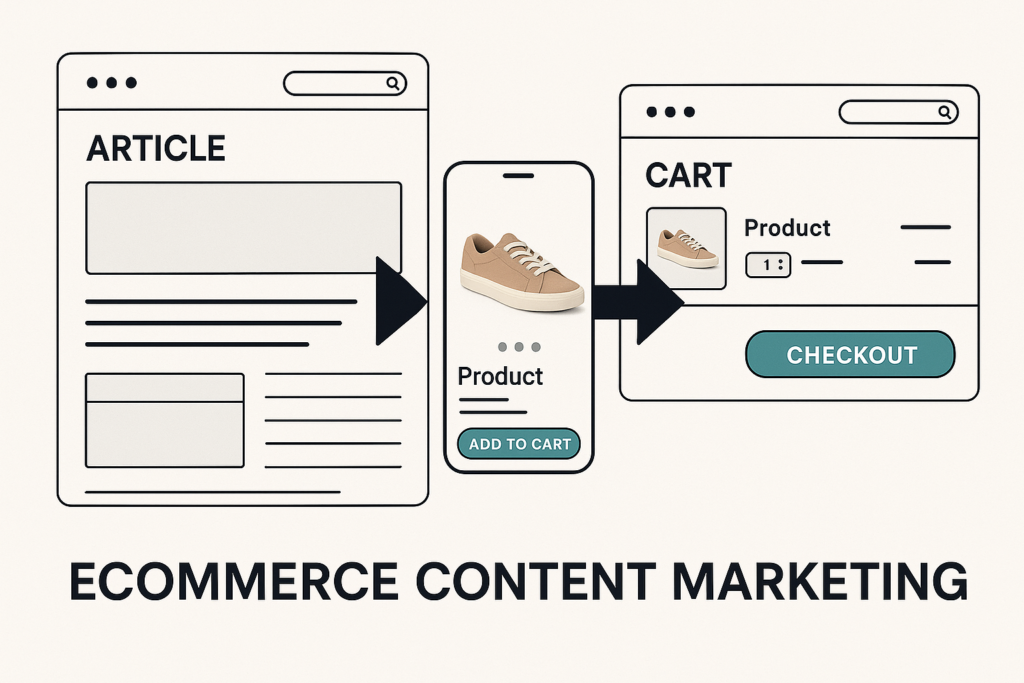
Most brands mistake ecommerce content marketing for a standard blog-based awareness tool. In reality, high-performing content serves as your digital sales guide. When done strategically, content bridges the gap between discovery and purchase, helping potential buyers find you, trust you, and move efficiently toward a transaction. It’s not just about rankings—it’s about creating meaningful, conversion-focused experiences at every stage of the funnel.
Here’s how different types of ecommerce SEO content can work together:
- Category Guides: Help shoppers make sense of broad product lines, narrowing choices and building confidence.
- Product Deep Dives: Resolve objections and highlight differentiators that drive purchase decisions.
- How-To & Buyer’s Guides: Address buyer pain points while seamlessly linking to relevant collections and product pages.
The synergy between these formats powers both organic discovery and higher onsite engagement—driving more qualified traffic and more sales. For a closer look at how D2C Design approaches holistic content, review our Content Marketing Services.
Why “Product-Led” Beats Traditional Blog Strategy
Traditional ecommerce blog strategy tends to chase broad traffic or loosely relevant topics. That approach rarely attracts visitors who are ready to buy. A product-led framework, on the other hand, prioritizes content mapped directly to specific collections, key products, and buyer pain points. This ensures your SEO efforts serve the business—not just the search engines.
Consider this decision lens when building a product-led strategy:
- What products or categories generate the highest margin and volume?
- What are the most common buyer questions or objections pre-purchase?
- Which keywords show strong transactional or investigative search intent?
Effective ecommerce blog strategy starts from these real commercial priorities, then crafts content clusters—such as comparison guides, troubleshooting tips, or in-depth reviews—around that demand. Each asset should naturally link back to relevant product and collection pages. This structure not only improves conversion but also strengthens internal SEO signals, increasing organic visibility for high-value pages.
Building a Revenue-Ready Content Map: A Practical Framework
Driving performance starts with connecting your content to key business goals and buyer journeys. Here’s a proven workflow for engineering a high-converting ecommerce content ecosystem:
- Identify Core Product Opportunities: Select your top-selling categories and high-margin products as centerpiece topics.
- Customer Listening: Mine reviews, chat logs, and support tickets for recurring buyer questions to directly inform your content briefs.
- Keyword Mapping: Research search demand for product-focused terms and FAQs that signal comparison or purchase intent—use tools like SEMrush, Ahrefs, or Google Search Console.
- Content Clusters: Develop interconnected content hubs, such as “How to Choose [Product Type],” “[Product Type] vs [Alternative],” or “Best Accessories for [Category].” Each hub tightly aligns with a collection or product page.
- Internal Linking Strategy: Integrate clear links from each piece to primary collections, product pages, and actionable service pages such as audits or consultation offers.
This product-led process ensures all blog and educational content is revenue-oriented, supporting both SEO growth and bottom-funnel behavior. For Shopify merchants, this is particularly powerful for outperforming generic “Shopify content marketing” approaches that fail to directly support product discovery or conversion.
Internal Linking: The Overlooked Conversion Lever
Most ecommerce content fails to convert because it functions in isolation—articles don’t guide users to take the next step, and valuable authority is lost in “dead end” pages. Internal linking, when managed with intent, keeps buyers moving, improves search rankings, and boosts average order value.
Best practices for internal linking in ecommerce SEO content:
- Every guide, blog, or resource page should contain strategic links to product, collection, and service pages.
- Use anchor text that reflects real buyer questions, pain points, or direct purchase intent (“Shop Top Sellers,” “Book a Free Audit,” etc.).
- Suggest related reads based on where a visitor is in the funnel—e.g., after a “Choosing the Best Supplement” article, offer links to product comparison charts and the highest-reviewed items.
Well-planned internal linking is not just about navigation; it’s about maximizing both the SEO authority and revenue potential of every visit. For a working example of effective content hubs, browse D2C Design’s Articles library.
Checklist: Auditing Your Ecommerce Content Marketing Program
- Are priority products and collections the foundation for your content?
- Does every content asset guide users toward a purchasing action or further diagnostic (audit, quiz, etc.)?
- Is internal linking implemented to support both SEO equity and higher conversion?
- Are you mapping every major content initiative to measurable business outcomes—keyword rankings, buy button clicks, audit requests, or average order value?
- Are you revisiting and updating top-performing content to support changing buyer needs and new product launches?
If any of these areas are unclear, it’s time to step back and realign your ecommerce content strategy to the requirements of modern, product-led SEO.
Final Thoughts
Successful ecommerce brands treat content not as an afterthought, but as a core engine of visibility, buyer confidence, and scalable revenue. If your content isn’t intentionally guiding buyers to your most important products—and capturing demand with strategic SEO, internal links, and clear CTAs—you’re giving up ground to more focused competitors. Content is not just about “traffic”—it’s about engineering profitable growth.
Ready to identify where your ecommerce content marketing is falling short? Book a Free Ecommerce Content Audit with D2C Design today. Our team will diagnose your current ecosystem and show you clear, actionable steps to unlock more revenue from your onsite content.
Common Questions
What’s the difference between traditional ecommerce blogging and a product-led content strategy?
Traditional ecommerce blogging typically focuses on top-funnel awareness topics or generic lifestyle posts. A product-led content strategy, by contrast, centers all content around high-value products, collections, and real buyer questions—directly supporting purchase paths and conversion, not just traffic.
How do I measure ROI from ecommerce content marketing?
The most effective metrics include organic search traffic to key collections and product pages, qualified leads or audit requests, conversion rates from content visits, and assisted revenue tracked via analytics. ROI is clearest when content is mapped to bottom-funnel actions, not just visits or shares.
What types of content work best for Shopify SEO and product-driven growth?
For Shopify stores, high-impact content includes in-depth buyer’s guides, comparison articles, how-to resources that solve pre-purchase questions, and strategic category or collection guides—all of which drive targeted, high-intent organic traffic and support internal SEO through smart linking.
How can internal linking between blogs and products improve sales?
Internal linking ensures that visitors move smoothly from discovery content to actionable steps—from learning about a product to viewing it, and eventually completing a purchase or booking a service. It also distributes SEO authority more effectively across your site, strengthening the ranking power of your most important product and collection pages.