
Ecommerce Website Development: Essential Decisions for Growth Brands
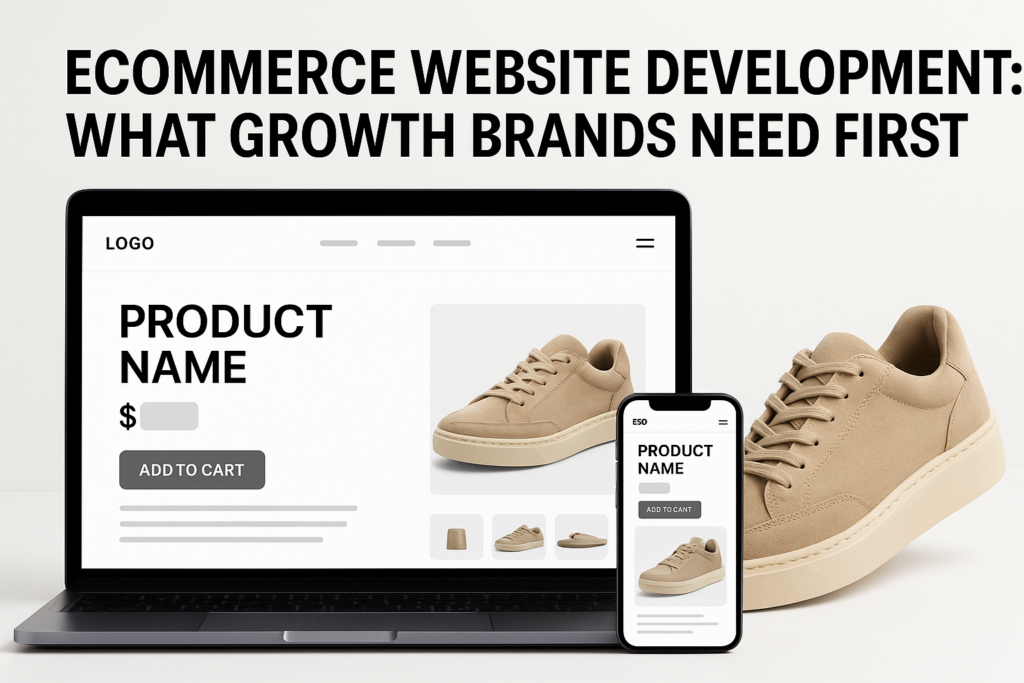
Rushed ecommerce builds stall revenue and create rework. Effective ecommerce website development isn’t about checking boxes on a feature list—it’s about making the right foundational decisions early, so every element of your site supports growth from day one. For brands seeking scalability, conversion, and sustained performance, development is no longer just a technical exercise: it’s a business-critical strategy with direct revenue impact.
The Real Foundation: Business Goals Before Code
The best-performing DTC brands know that every web project must start with a clear statement of business intent. Before a single pixel is designed or a line of code is written, the leadership team should answer:
- What revenue growth targets will the new site support?
- How should the user journey reflect our merchandising and brand?
- What operational or marketing bottlenecks exist on the current site?
- How quickly do we expect to scale—traffic, products, geographies?
This business-led scoping process shapes your requirements and avoids costly, underperforming builds. When goals are unclear, even the most skilled development partners are forced into guesswork—leading to sites that don’t convert, can’t integrate, or fall short of marketing needs. Before you launch into build mode, ensure your requirements are grounded in business outcomes—not just backlogs and wishlists.
Choosing Your Platform and Tech Stack for Long-Term Growth
Your ecommerce platform is your operational backbone. The right choice will serve you for years—while the wrong one forces short-term workarounds and future rebuilds. Take a deliberate approach:
- Platform Fit: Shopify dominates DTC ecommerce for a reason: extensive integrations, reliable performance, and a proven merchant ecosystem. But is it right for your merchandising model and anticipated complexity?
- Integration Demands: List every tool, system, or workflow you rely on—ERP, fulfillment, reviews, subscriptions, email marketing, analytics, and more. Not all platforms handle complex integrations equally.
- Custom Ecommerce Development Requirements: If your workflows, products, or customer experiences demand bespoke features, verify the platform’s support for custom development before you commit.
View platform choice as a long-term investment in agility, not just a decision for ‘what we need today’. For further analysis and solutioning, explore our ecommerce web development services or deep-dive into our Shopify expertise.
A Practical Decision Framework for Ecommerce Build Success
To ensure your ecommerce website development process is growth-ready and efficient, use this practical pre-build checklist:
- Business Goals Captured: Do all stakeholders agree on topline revenue and conversion metrics?
- Platform Fit Confirmed: Does your chosen ecommerce platform meet today’s and tomorrow’s needs—merchandising, integrations, custom flows?
- Key Integrations Mapped: Are all marketing, fulfillment, and analytics integrations fully scoped?
- Performance Benchmarks Set: Has your design/development team defined site speed, mobile responsiveness, and uptime goals?
- Conversion and Merchandising Strategy Aligned: Is UX planning supporting your best-selling products and high-velocity SKUs?
- Data and Analytics Plan Cleared: Will every customer action be tracked in a way that supports actionable reporting?
Measuring plans against these checkpoints dramatically reduces rework and supports a faster, more reliable build process.
User Experience, Speed, and Merchandising: Non-Negotiables from Day One
UX design isn’t a “nice to have”—it’s the core lever for site conversion and revenue. Best-in-class brands bake in:
- Site Speed: Every second of load time reduces conversion rates. Make speed a design constraint, not a post-launch fix.
- Navigation Simplicity: Clear, logical menus move customers to purchase with fewer clicks and less friction.
- Mobile Optimization: Mobile-first flows are critical for both organic reach and conversion, especially for younger, mobile-native shoppers.
- Merchandising Strategy: Hero products, bundles, and high-velocity SKUs should own prominent real estate and frictionless pathways from discovery to checkout.
- Conversion Optimization: Proven patterns—trust badges, scarcity cues, social proof, optimized forms—drive incremental growth at every stage.
The most common—and costly—mistakes are deferring these decisions or treating them as launch-phase “add-ons.” That approach locks in mediocre conversion rates, leads to capex-heavy replatforming or painful post-launch rework.
Why Growth Brands Invest in Ecommerce Website Development Audits
Most brands overestimate their own readiness. A professional website audit, conducted by experienced partners who understand both business and technical fundamentals, diagnoses old-code risks, identifies conversion gaps, and benchmarks your build plan against modern growth standards.
Brand leaders use audits to answer:
- Where are we most exposed to future friction or expensive fixes?
- What ROI opportunities are hiding in our UX, speed, or integration strategy?
- Are there blind spots or missed requirements that could compromise launch?
Whether you’re preparing for a full overhaul or a targeted upgrade, a free audit provides clarity, control, and cost certainty.
Final Thoughts
Growth brands know that ecommerce website development isn’t about launching a site—it’s about underwriting future profits, conversion lift, and operational scale. Every smart build starts with strategic clarity, future-proof platform choices, rock-solid UX, and a relentless focus on data and merchandising performance. Don’t settle for default decisions and wasted spend—validate your roadmap before you invest.
Ready to benchmark your plan and uncover opportunities before you build? Request your Free Audit from D2C Design to see where your strategy stands against top-tier ecommerce standards.
Common Questions
What is the most important first step in ecommerce website development?
Establishing clear business goals and requirements before technology choices ensures the site is built for sustained revenue, not just launch.
How do I choose the right ecommerce platform for my brand’s growth?
Objectively weigh current needs, future scale, integration demands, and merchandising models—Shopify is often ideal for DTC scalability, but always validate fit.
Why do many ecommerce builds fail to drive conversion and growth?
Most failures begin at the requirements stage—neglecting UX, speed, data tracking, and future integrations leads to underperforming sites from day one.
How can a website development audit help my ecommerce brand?
A tailored audit identifies gaps in your current approach, benchmarks your roadmap against best practices, and prevents costly missteps before you build.