
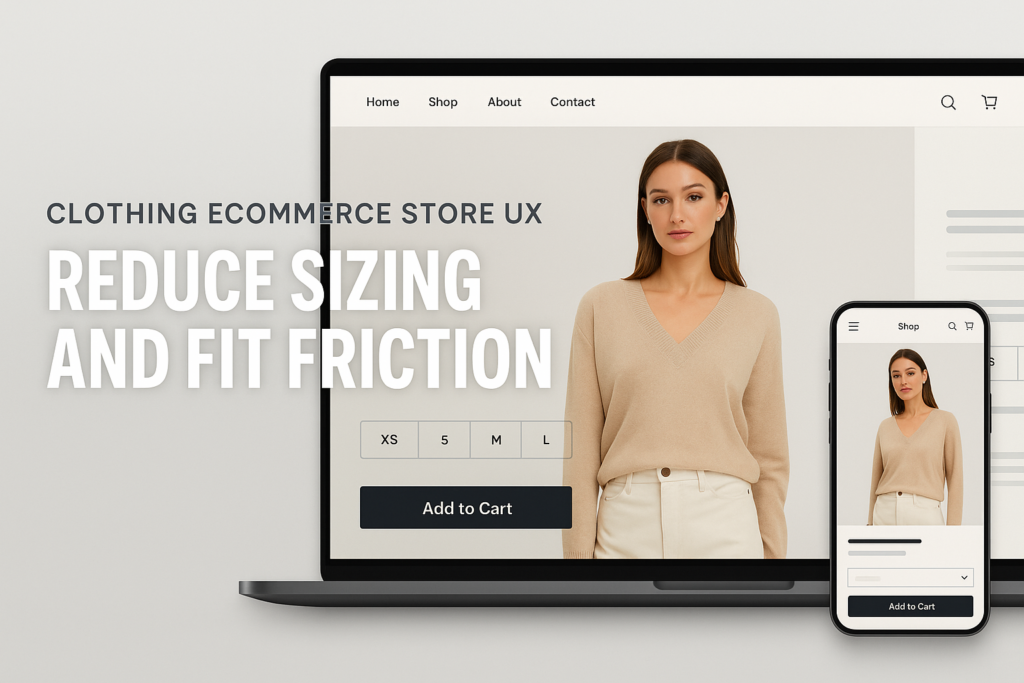
Clothing Ecommerce Store UX: Removing Size and Fit Barriers for Fashion Brands
Every lost sale to a “what size am I?” doubt is revenue left on the table. For fashion brands, the performance of a clothing ecommerce store is defined by how well it builds buyer confidence—especially when customers can’t touch or try items before purchase. As ecommerce decision-makers, you need more than attractive design or slick branding: you need a conversion-focused UX that dissolves size and fit uncertainty at every step.
Despite growing investment in fashion ecommerce website design, many brands still overlook the practical solutions to reduce friction for apparel shoppers. Sizing confusion, lack of real-fit information, and outdated returns workflows continue to drag on conversion rates, margins, and lifetime value. In this article, we’ll outline practical strategies—rooted in UX, CRO, and retention marketing—that drive measurable outcomes for modern Shopify fashion brand websites.
Why Sizing & Fit UX Still Short-Circuits Conversions
Most apparel ecommerce sites treat sizing and fit as an afterthought. Static size charts, vague item descriptions, and one-size-fits-all imagery aren’t enough to address shopper concerns. For the fashion vertical, the path to purchase is uniquely riddled with sizing uncertainty—a single doubt can cause a bounce or a costly return.
UX research consistently shows that apparel customers crave specificity. Before buying, shoppers want a clear, trustworthy answer to “Will this fit me?” Meeting this need requires going beyond the basics. Brands must deliver:
- Interactive and highly accessible size guides, visible where decisions are made
- Fit notes based on real garment details and prior customer feedback
- Customer reviews organized specifically for fit, feel, and body type
- Mobile-first navigation that keeps size and fit solutions easy to access
Ignoring these elements drives drop-off, hesitation, and repeat returns—the silent killers of apparel ecommerce growth. The solution is to make fit and size information part of a cohesive shopper journey, not a buried afterthought.
Building Buyer Trust with Apparel-Specific UX
Modern clothing ecommerce stores create trust by making the right size and fit decision intuitive and reassuring. UX solutions in apparel must go beyond the aesthetic, focusing on buyer psychology and decision simplicity. Here are core strategies to implement:
- Layered Size Guides: Move beyond simple charts. Interactive tools let users enter their measurements, compare sizing to other popular brands, or see model size references. Make these guides accessible on every product page, not in hidden dropdowns or pop-ups.
- Detailed Fit Notes: Use clear language about how items run (e.g., “runs true to size”, “slim fit”) and specify the shape, stretch, and fabric characteristics. Adding predicted fit based on returns data can anticipate common sizing mistakes.
- Review Structures for Apparel: Encourage customers to share height, weight, usual size, and fit feedback in reviews. Group and filter reviews by body type and sizing outcome, transforming social proof into decision fuel.
- Product Imagery and Video: High-value stores use diverse models with visible sizing context and 360-degree or movement video. This reduces uncertainty, particularly for new shoppers, and supports a premium perception.
- Mobile-First Filtering and Search: As apparel browsing is often mobile-dominant, ensure that size, fit, length, color, and fabric filters are highly accessible and easy to use on small screens.
These tactics are efficient to implement—especially for Shopify fashion brand websites—when you combine theme customizations with advanced Shopify integrations. Get expert Shopify design and UX support to deploy these strategies at scale and keep your store ahead of shifting customer expectations.
Returns, Data, and Differentiation: Apparel’s CRO Levers
Return rates pose a unique risk for clothing ecommerce. Many returns are entirely avoidable with robust size and fit UX. A strong feedback loop—from customer reviews, returns data, and post-purchase surveys—can improve both the shopper experience and protect your bottom line.
- Predictive Sizing Integrations: Use apps and tools that blend purchase data, returns patterns, and size selection to recommend the most likely “best fit,” reducing uncertainty and unnecessary returns.
- Returns Data-Driven Fit Adjustments: Analyze why items are returned (“too small”, “too loose”) and integrate this data into your fit notes and size guide content.
- Straightforward Return Policies: Clearly present return policy information—especially around size—on every product page and in the checkout flow. A frictionless return experience builds trust and long-term loyalty.
- Frictionless Return and Exchange UX: Invest in technology to streamline returns processing and accelerate exchanges for sizing issues. This turns post-purchase pain into another opportunity to delight and retain customers.
These continuous improvements give your clothing ecommerce store a defensible edge in a crowded market. They also drive measurable revenue impact—see real before-and-after outcomes from performance-focused apparel web projects.
Practical Framework: Friction Audit for Clothing Ecommerce UX
To operationalize these strategies, use this friction audit as a recurring CRO lens:
- Are size guides interactive, instantly accessible, and product-specific?
- Is every product page equipped with actionable fit notes—ideally informed by recent returns or reviews?
- Do reviews highlight sizing outcomes by customer attributes (height, weight, usual size)?
- Does your mobile experience put filters, guides, and imagery within thumb reach?
- Are your returns and exchange flows simple and visible at the moment of conversion?
Review your clothing ecommerce store against these points each quarter. Small UX upgrades, when tied to apparel-specific conversion data, add up to reliable revenue lifts.
Final Thoughts
In apparel ecommerce, success hinges on removing shopper hesitation around size and fit—long before checkout. The brands that treat fit friction as a revenue lever, not a UX afterthought, convert better and retain more customers. Prioritize practical, data-led upgrades to size guidance, fit clarity, reviews, and returns. These are the strategic moves separating growth brands from the rest.
Ready to identify the size and fit friction points costing your business? Request a free, actionable audit from D2C Design—we’ll show you exactly where to optimize for conversion and profit in your clothing ecommerce store.
Common Questions
What elements are essential for a high-converting clothing ecommerce store layout?
High-performing clothing ecommerce store layouts include instantly accessible size guides, product-specific fit notes, filtered customer reviews about size and comfort, high-quality model imagery, and mobile-optimized navigation. Each element reduces friction and moves shoppers confidently toward checkout.
How can Shopify stores best display size guides and fit notes for apparel?
Display size guides as easily accessible buttons or links on every product page, ideally with interactive features like measurement inputs or brand comparisons. Fit notes should be placed above or near the main call to action and updated regularly with customer feedback and returns insights.
What impact do detailed customer reviews and fit feedback have on returns and conversion for fashion ecommerce sites?
Detailed reviews—especially when tied to body types, fit experience, and purchase outcomes—build confidence for new shoppers. Stores that showcase this social proof can reduce purchase hesitation, lower return rates associated with poor fit, and improve overall conversion and customer loyalty.
What are some data-driven ways to reduce sizing-related returns in apparel DTC brands?
Use returns analytics to refine fit notes and size recommendations. Implement predictive sizing apps that recommend based on past purchases and minimize the guesswork. Continually analyze and evolve product page content using feedback, real world wear reports, and post-purchase surveys.