

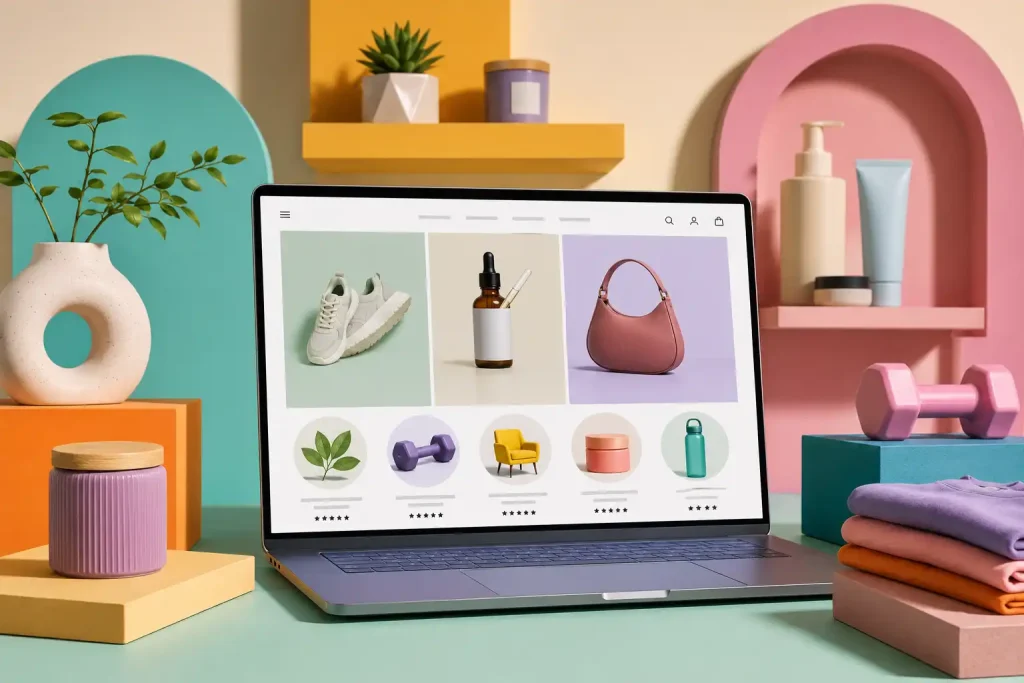
Ecommerce platforms have made it easier than ever to launch an online store, but they have also created a growing landscape of websites that look and behave almost exactly the same. The problem is not that templates are inherently ineffective; many provide excellent technical foundations. The problem appears when brands treat ecommerce design as if every customer, product, and buying decision follows the same pattern. A shopper purchasing a $1,500 piece of jewelry does not evaluate risk the same way as someone adding a $25 supplement to a monthly subscription. A parent buying baby products has different questions from an automotive buyer searching by compatibility. A fashion customer cares about fit, styling, and returns in ways that may be irrelevant to a home goods buyer. Industry-specific ecommerce design recognizes these differences and translates them into structure, content, merchandising, and user experience. Instead of forcing every business into one standard layout, the website is designed around how customers actually make decisions within that category.
One of the clearest examples is the amount and type of information a shopper needs before purchasing. In supplements and wellness, customers may want ingredient details, dosage guidance, certifications, expected benefits, usage instructions, subscription options, and reassurance around quality. Fashion shoppers are more likely to prioritize imagery, sizing, fit, material, styling inspiration, and return policies. Jewelry customers may care about materials, dimensions, craftsmanship, authentication, warranties, gifting, and high-resolution product detail. Automotive ecommerce can introduce an entirely different level of complexity because product compatibility may be essential to the purchase itself. If those businesses all use the same generic product page architecture, important information is inevitably either buried or overemphasized. Industry-focused design solves this by identifying the questions most likely to influence a purchase and building the interface around answering them at the right moment.
Merchandising strategy also changes dramatically between verticals. Some categories depend on visual discovery, while others rely on structured filtering and comparison. Fashion brands may benefit from editorial collections, complete-the-look modules, color swatches, seasonal storytelling, and lifestyle photography. Home goods stores often need room-based inspiration, scale references, dimensions, materials, and complementary-product recommendations. High-SKU retailers require stronger search, filtering, sorting, and taxonomy because shoppers frequently arrive with a specific need rather than a desire to browse. Subscription products must communicate the economic and practical value of recurring delivery, while replenishment-driven products should make reordering effortless. These differences are not cosmetic. They affect how quickly shoppers find relevant products, how many pages they visit, how confident they feel, and how likely they are to increase basket size. Good merchandising turns a catalog into a guided shopping experience.
Industry specialization also improves conversion because it helps brands address category-specific objections before they become reasons to abandon the purchase. Every ecommerce vertical has recurring forms of hesitation. A skincare customer may wonder whether a formula is suitable for sensitive skin. A supplement buyer may question efficacy or ingredient quality. A luxury customer may worry about authenticity and delivery security. A furniture shopper may hesitate because of dimensions, assembly, or returns logistics. A wholesale buyer may need information about minimum quantities, account requirements, pricing tiers, or lead times. When designers understand these objections, they can build reassurance directly into the journey through product content, visual modules, comparison tools, reviews, FAQs, guarantees, shipping information, and contextual calls to action. The website becomes more persuasive because it answers the customer’s next question before the customer has to search for the answer.
Brand perception also behaves differently across categories, which means visual design should be adapted to the expectations of the market rather than applied as a universal aesthetic. Luxury ecommerce often benefits from restraint, editorial spacing, exceptional photography, controlled typography, and deliberate pacing because those elements communicate exclusivity and craftsmanship. Mass-market consumer products may require a faster, more energetic hierarchy built around benefits, offers, reviews, and product discovery. Wellness brands often need to balance scientific credibility with warmth and accessibility. Technology products may need to communicate innovation without making complex features intimidating. The challenge is to create a visual language that feels appropriate for the vertical without becoming predictable or interchangeable with competitors. Industry knowledge gives designers a baseline understanding of customer expectations, while strong branding allows them to intentionally follow, refine, or challenge those expectations.
The same principle applies to promotional strategy. Discounts, bundles, free shipping thresholds, subscriptions, loyalty programs, and cross-sells do not create equal value in every business model. For a low-ticket consumable product, bundles may increase average order value while reducing the customer’s perceived cost per unit. In a luxury category, aggressive discounting may damage brand perception and should be replaced by gifting, exclusivity, service, or limited availability. Subscription products require careful communication around savings, frequency, cancellation, and flexibility because customers evaluate the long-term commitment rather than a single purchase. Wholesale or B2B ecommerce may depend more on volume pricing, account-based purchasing, repeat orders, and commercial terms. A specialized design approach considers these mechanics as part of the user experience, ensuring that promotional elements support the commercial model instead of simply filling space with generic ecommerce tactics.
Industry-aware design becomes even more valuable when acquisition strategy is considered. Customers arriving from Google Shopping often behave differently from shoppers coming from Instagram, TikTok, influencer campaigns, email, or branded search. A fashion customer who discovers a product through visual content may expect a seamless transition from inspiration to product exploration. A supplement shopper arriving from an educational advertisement may need the landing page to continue the same benefit-led narrative. A high-intent search visitor may want immediate access to specifications, compatibility, pricing, or availability. The ecommerce website cannot be designed in isolation from the channels that feed it. Strong D2C architecture creates continuity between acquisition message and storefront experience, reducing the disconnect that frequently occurs when an effective advertisement sends visitors into a generic homepage or product template that no longer speaks to the reason they clicked.
Ultimately, specialization does not mean creating rigid rules for each industry. It means developing a deeper starting point. Every brand still has its own audience, product economics, positioning, catalog, acquisition strategy, and operational constraints. But understanding the vertical allows the design process to begin with better questions and fewer assumptions. At D2C Design, industry-specific ecommerce design is about combining category knowledge with brand-specific strategy. We look at how customers discover products, what creates confidence, which information drives decisions, how merchandising should work, where friction is likely to occur, and which behaviors matter most commercially. The result is a storefront that feels appropriate to the category while still being distinct to the brand—a website designed not simply around what ecommerce normally looks like, but around what the business and its customers actually need.