
Car Parts Online Store UX: Boost Fitment Confidence & Conversion
Most car parts online stores don’t lose sales because of low traffic—they lose them because buyers can’t be sure the part fits. At scale, every ounce of uncertainty destroys not just revenue, but also buyer trust. For owners and managers of an automotive ecommerce website, your challenge is clear: remove every possible doubt and make finding the right part effortless. A high-performing car parts online store turns browsers into confident buyers by prioritizing best-in-class fitment lookup, robust specs, compatibility tools, and checkout trust signals. Let’s cut through the noise to the specifics that drive measurable outcomes in auto parts ecommerce.
The Critical Role of Fitment Lookup in Car Parts Ecommerce
Fitment lookup isn’t a “nice to have”—it’s the core mechanic of any successful auto parts ecommerce website. In most cases, users arrive with a clear intent: “Will this part work for my vehicle?” If your site makes that answer hard to find, hesitation will kill conversion.
To convert at enterprise level, your online store should deploy:
- Vehicle year/make/model/engine selectors: Make these persistent and accessible across home, category, and product pages.
- Instant compatibility validation: Display clear visual validation (‘Fits your 2018 Ford F-150’) before add-to-cart.
- Dynamic filtering: Filter inventory results in real time as shoppers choose fitment parameters.
- Auto-complete and VIN lookup: Expedite searches by reducing error and effort.
For brands scaling or migrating to Shopify, modern fitment lookup can be architected directly into your Shopify automotive ecommerce platform if planned during design or rebuild. The ROI is clear: less friction, lower return rates, and improved buyer satisfaction.
Product Specs and Compatibility: The Trust Multipliers
Auto parts buyers aren’t guessing—they’re on a mission. Yet too many car parts online stores still offer vague product data or rely on generic compatibility lists. Every incomplete spec or missing compatibility detail invites second-guessing and abandons carts.
- Comprehensive product specs: List OEM numbers, material types, weights, dimensions, compatible sub-models, and installation notes.
- Clear compatibility tables: Show a detailed, dynamically updating table with all supported years, makes, and models. For universal or multi-fit parts, explain the range plainly.
- Transparent warranty and return info: Buyers expect clear warranty length and return/exchange policies up front, not buried in site footers.
- Enhanced imagery and documentation: High-res photos, install PDFs, and videos reduce confusion and call-backs.
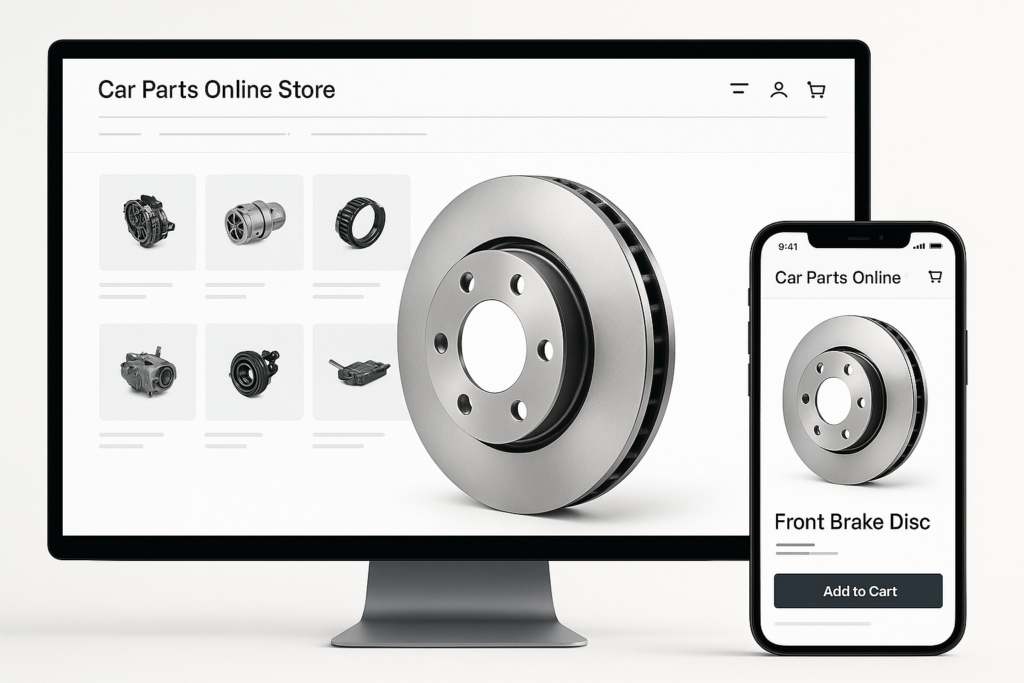
The best automotive ecommerce website experiences connect specs, compatibility, and visual cues—ideally adjacent to the “Add to Cart” call-to-action. This not only increases conversion, but measurably reduces post-purchase support requests. Our real results showcase how strategic product data upgrades can impact bottom-line growth.
Filters, Navigation, and UX Patterns that Drive Part Discovery
On most auto parts ecommerce stores, the journey from homepage to correct product is unnecessarily long. D2C-optimized stores apply precise UI/UX to accelerate discovery and capture more of your existing traffic. Practical approaches:
- Attribute filtering: Let users slice by brand, subcategory, part type, color/material, and feature (e.g., “anti-corrosion”).
- Sticky vehicle selector: Keep vehicle info visible as a user navigates, ensuring all listings are context-specific.
- Quick-view and compare: Allow one-click comparison for shoppers weighing similar items.
- Breadcrumbs and step indicators: Orient buyers with clear navigation and progress cues.
Practical framework: Test page layouts by timing how long it takes a new user to input their vehicle, filter to the right subcategory, and confirm fitment for a specific part. Any step that adds cognitive load risks losing the sale.
Checkout Confidence: Shipping, Returns, and Final Trust Signals
Even with perfect fitment UX, conversion isn’t guaranteed without a frictionless checkout. The last mile of your ecommerce experience demands clarity and assurance:
- Prominent fitment guarantee messaging: Use badges and callouts to reassure buyers that items are guaranteed-to-fit or returnable if not.
- Clear, up-front shipping details: Show real-time shipping costs and delivery windows before checkout begins.
- Trust badges and secure payment options: Display recognizable security logos and straightforward payment options to reduce drop-off.
- No hidden fields or surprise requirements: Don’t force account creation or unnecessary fields at checkout.
The best auto parts ecommerce website experiences make policies explicit—not buried. Make FAQs, warranty terms, and returns crystal-clear on both product and checkout pages. Proactive clarity builds trust and revenue.
Performance Checklist: Is Your Car Parts Online Store Frictionless?
- Fitment lookup is visible, intuitive, and returns accurate results
- All products list complete specs, OEM numbers, compatibility, and documentation
- Attribute filtering is fast, reliable, and relevant to car parts shoppers
- Warranty, returns, and shipping info are prominent on every PDP and checkout
- Checkout UX is straightforward, secure, and free of surprises
If your store struggles on any of these pillars, the risk isn’t just missed revenue—it’s lasting buyer distrust.
Final Thoughts
Conversion in car parts ecommerce is a matter of trust—and that trust is built at every step, from search to checkout. An optimized car parts online store connects the dots: advanced fitment, precise specs, robust filters, and no-surprises checkout. Rely on evidence-based UX improvements, and revenue will follow.
If you want clarity on where your automotive ecommerce website can unlock more growth, consider a Free Audit from D2C Design. Stop guessing—start converting with confidence.
Common Questions
How can I improve part fitment lookup on my car parts online store?
Integrate advanced vehicle selectors (year, make, model, engine), enable VIN lookup, and use dynamic compatibility validation to instantly show shoppers whether a part fits their car. Intuitive fitment tools directly reduce cart abandonment and returns.
What product specs and data matter most to auto parts ecommerce buyers?
Buyers want to see detailed compatibility (year/make/model), OEM or manufacturer numbers, part dimensions, installation guides, material, and warranty coverage. Including all relevant data near “Add to Cart” reassures buyers and speeds decision-making.
How do shipping and return UX impact conversion in automotive ecommerce?
Clear up-front shipping costs, transparent delivery windows, easy-to-find return policies, and trust badges around fitment guarantees all lower last-minute anxiety and increase checkout conversion. Surprises at checkout are a leading reason for cart abandonment in this vertical.
When should an auto parts store consider a UX audit?
If you notice high cart abandonment, increased returns due to incorrect orders, or poor conversion from search to product pages, a UX audit can spotlight missed opportunities and friction points that hinder revenue growth.