

Ecommerce Email Marketing Strategy: Prioritize Flows for Scalable Retention
Too many ecommerce brands invest in eye-catching campaigns but overlook the core structure that creates dependable revenue: a well-built ecommerce email marketing strategy based on lifecycle flows. If you’re seeing lackluster performance—even with regular broadcasting—there’s a strong chance foundational flows are missing or misaligned. For DTC and Shopify brands ready to scale, the highest ROI opportunities aren’t in sending more, but in architecting smarter automation that meets customers at every critical point in their journey.
Why Foundational Flows Outperform Campaigns
The instinct to launch new creative campaigns is understandable. They’re visible, they feel active, and they can produce spikes in short-term engagement. But for ecommerce, this is a common misstep. Campaigns are not a substitute for revenue-ready flows that work silently in the background—consistently converting new leads, rescuing abandoned carts, nurturing post-purchase loyalty, and bringing back dormant shoppers.
Without these automated flows, brands end up with costly churn, inconsistent growth, and a disconnect between what customers expect and what they experience. When flows are in place and optimized, brands see:
- Higher conversion rates and more predictable revenue
- Less revenue leakage from abandoned carts or first-time buyers who never return
- More effective long-term retention, resulting in stronger lifetime value
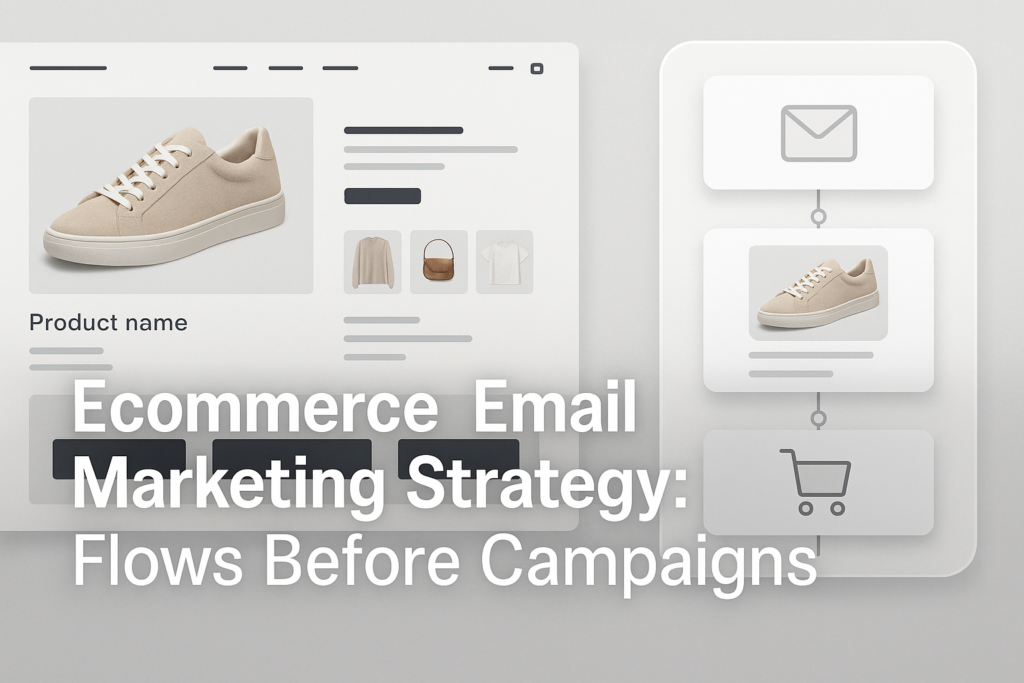
Foundational flows—welcome, cart recovery, post-purchase, and win-back—are the essential building blocks. Prioritizing these in your ecommerce email marketing strategy creates a durable growth engine, while campaigns serve as amplifiers, not the core revenue driver.
Mapping and Prioritizing the Email Flows That Matter
Success hinges on building the right flows, in the right order, for the right segments. Here is the actionable roadmap every ecommerce business should use before investing in frequent campaigns:
- Welcome Series: Triggered when a new subscriber or buyer joins your list. Educate them, reinforce trust, and invite first action. This is where experience, trust signals, and differentiated value are established.
- Cart Abandonment Flow: Automatically targets shoppers who leave before checkout—re-engaging them with behavioral triggers, timely reminders, and sometimes personalized incentives.
- Browse Abandonment Flow: Similar to cart abandonment, but aimed at shoppers who heavily browse without adding to cart. These subtle nudges convert curious browsers into committed buyers.
- Post-Purchase Flow: More than just a receipt—provide product education, order updates, upsell/cross-sell opportunities, and a clear pathway to becoming a repeat customer.
- Win-Back/Re-Engagement Flow: Target lapsed buyers who haven’t purchased in a set period. Offer reminders, updates, or special offers tailored to their purchase history.
Brands that excel with these flows don’t just automate messages—they build a customer journey. Segmentation by purchase history, browsing behavior, and customer value allows every touchpoint to feel relevant and intentional. Need proven guidance on customizing these flows to your business? Explore D2C Design’s Marketing Communications services for a strategic blueprint that powers retention and conversion across Shopify and DTC ecosystems.
The D2C Design Email Flow Checklist
- Welcome: Engages new signups or customers within minutes of subscription
- Cart Abandonment: Sends at least 2 reminders (consider testing send times and incentives)
- Browse Abandonment: Segment high-intent browsers for follow-up within 24 hours
- Post-Purchase: Confirms order, delivers education, requests feedback, and recommends add-ons
- Win-Back: Re-engages after 30/60/90 days, personalized to purchase history or lifecycle stage
If any of these flows are missing or underperforming, address them before launching your next big campaign. The gains in recovered revenue and brand loyalty are measurable and repeatable.
Maximizing Retention and Revenue with Smart Personalization
Once the core flows are live, the real performance leap comes from smarter segmentation and personalized content. This goes far beyond “first name” merges. Leaders in ecommerce email marketing are dynamically segmenting audiences based on:
- Recent product views or category interest
- Average order value or purchase frequency (VIP vs one-time buyers)
- Geography or fulfillment speed preferences
- Engagement with specific content topics or brand stories
Flows that reference a customer’s actual behavior—like surfacing educational content for new customers, reminding about nearly purchased products, or upselling complementary items post-checkout—dramatically outperform generic sends. If your Shopify email campaigns aren’t using these data points, you’re missing meaningful profit and retention opportunities.
For brands seeking to build these capabilities, D2C Design’s Content Marketing services specialize in tailoring product education and messaging that convert one-time buyers into loyal advocates.
Framework: The Three-Lens Flow Audit
Use this checklist to audit and level up your flows before strategizing your next campaign:
- Coverage: Do you have flows for every stage: lead, cart, post-purchase, and win-back? Are they triggered based on real user behavior?
- Relevancy: Are flows personalized based on product, customer history, and engagement signals?
- Content Quality: Does every flow provide brand value—education, reassurance, an offer, or next step—instead of just pushing a sale?
Assess each flow against these lenses monthly. This framework surfaces both technical gaps and opportunities for revenue optimization—without getting lost in campaign “busyness” that often distracts from foundational results.
Final Thoughts
The true differentiator in modern ecommerce email marketing strategy isn’t frequency—it’s intelligent automation that meets the customer with the right message, at the right moment, no matter the channel or device. Campaigns have their place, but flows built on real purchase and behavior data are what drive reliable, scalable retention. Invest in your foundation, and watch your campaigns start to work harder for you.
Ready to see how your ecommerce email program stacks up—and where your fastest profit wins are hiding? Request a Free Audit from D2C Design and get expert insight into optimizing your flows and boosting your retention strategy now.
Common Questions
What are the most critical ecommerce email flows to implement first?
Start with welcome, cart abandonment, and post-purchase flows. These foundational automations recover lost revenue, build early trust, and create repeat buyers, making them essential for any retention-focused ecommerce strategy.
How do email flows differ from campaigns in ecommerce strategy?
Email flows are automated, behavior-based sequences triggered by specific customer actions or lifecycle events. Campaigns are one-off, time-based broadcasts sent to larger segments. Effective ecommerce email marketing strategy relies on flows to drive consistent sales, while campaigns serve to amplify product launches, events, or promotions.
How can segmentation improve ecommerce email marketing results?
Segmentation tailors content and timing based on a customer’s purchase behavior, engagement level, and preferences. This increases relevancy, boosts open and click rates, and directly impacts revenue per email sent.
When should my brand add more complex flows or campaigns?
Only after your core lifecycle flows are live and generating results. From there, introduce advanced flows like VIP rewards, replenishment reminders, or specialized sequences for different product lines and markets. Campaigns should serve as timely boosts, not the main engine of email performance.